







Cages & Rigs: The Backbone of Every Modern Commercial Gym

Walk into almost any commercial gym today and you'll see it straight away — a bank of squat racks or a full rig taking pride of place on the floor. It's not a trend that's slowing down either. Squat-based training has become one of the most in-demand movement patterns in commercial fitness, and gym owners who haven't kept pace with rig capacity are starting to feel it.
Contact UsWhy Squat Culture Has Taken Over Commercial Gyms
The days of a lone squat rack tucked in the corner are long gone. Strength training, functional fitness and hybrid athlete programming have all pushed compound lifts — squats, presses, pulls — to the centre of most members' programs. Whether someone's following a structured strength block, training for a Hyrox event, or just chasing a stronger squat for general fitness, they're heading for the rack.
That shift in member behaviour means rig space has become one of the most valuable pieces of real estate on your gym floor.
The Peak-Hour Problem: Do You Have Enough Rack Space?
Here's the issue we see time and again when we walk into gyms for a consult: plenty of cardio equipment, plenty of floor space, but only two or three squat stations to service a membership base of hundreds.
At 6am and 5:30pm — the two windows every commercial gym lives and dies by — that shortage turns into a bottleneck. Members queue for a rack, get frustrated, cut their session short, or worse, start looking at gyms down the road that can actually accommodate their training.
The fix isn't complicated: gyms need to scale rig and cage numbers to match real demand at peak times, not just average daily usage. A gym that's quiet at 11am but slammed at peak hour needs to plan its rig count for the slammed version of itself, not the quiet one. This is one of the most common oversights we help gym owners correct when we're designing a fit-out — it's far easier to solve at the planning stage than to retrofit later.
Contact Us
It's Not Just About the Rack — It's About What's Attached to It
A cage or rig on its own is a great start, but the accessories are what turn it into a genuinely useful piece of equipment for your members and your programming team.
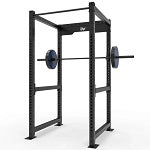
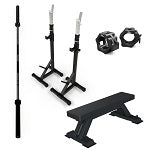
Spotting arms are the non-negotiable safety feature. For any gym serious about duty of care, especially with members training heavy or solo, spotting arms give lifters the confidence to push their limits without needing a second person on hand. It's a simple addition that removes a serious liability risk.
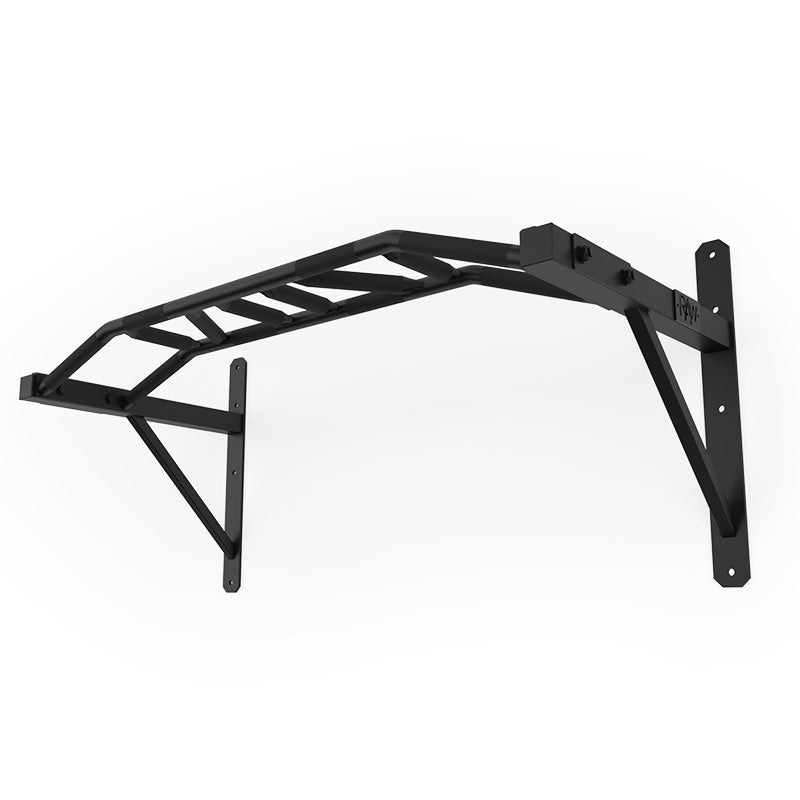
Dip bar attachments turn a squat station into an upper-body training tool as well, letting members work chest, triceps and shoulders without needing a separate dip station taking up floor space elsewhere.
Landmine attachments are one of the most underrated additions we recommend. They open up rotational presses, single-arm rows, and landmine squats — movement patterns that are increasingly popular in functional and hybrid training but often missing from a standard gym floor.
Get these three accessories right and a single rig becomes four or five pieces of equipment in the footprint of one.
Case Study: Two Spaces, Two Rig Strategies
Reborn Gyms is a good example of how this plays out in practice. Rather than treating rig space as a single, uniform allocation, they've split it across two distinct zones:
- A strength room, available to members at any time, kitted out so lifters can train squats, presses and pulls independently whenever they walk in.
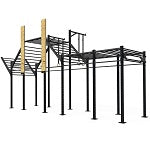
- A group training room, built around a large 5-cell rig designed specifically for running group sessions — multiple members working through a program together, coached, on a schedule.
It's a smart way to solve two different problems with two different rig setups. The strength room takes the pressure off peak-hour bottlenecks for members training on their own, while the 5-cell rig gives the group training side of the business the scale it needs to run proper class-based sessions without members waiting on each other. Gyms weighing up how to allocate their rig footprint could do a lot worse than starting from this kind of split.
Contact UsWhy Cages & Rigs Are One of the Smartest Equipment Investments You'll Make
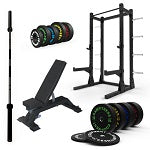
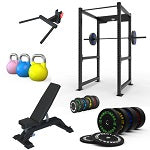
Dollar for dollar, a well-specced cage or rig delivers more training value per square metre than almost anything else you can put on a gym floor. A single station can support squats, bench and overhead pressing, pull-ups, dips, rows, and accessory work — all without the member needing to move to another machine.
Compare that to a single-purpose cardio or resistance machine that only does one thing, and the return on investment becomes obvious. Rigs also tend to have a longer usable life than most cardio equipment, and they hold their appeal across a wider range of training styles — strength, functional, group fitness, and rehab-focused programming can all work off the same station.
For gym owners planning a fit-out or refresh, getting the rig count and accessory spec right from day one isn't just a nice-to-have. It's one of the highest-impact decisions on the entire equipment list.
The Takeaway
If there's one area of the gym floor worth over-investing in, it's your cages and rigs. Plan for peak-hour demand, not average demand. Kit your stations out with spotting arms, dip bars and landmine attachments so every rig works harder for you. And treat the investment for what it is — one of the most versatile, highest-utilisation pieces of equipment you'll ever put on your floor.
Contact Us